
Do beauty filters impact mental health?
Increasingly, scientific and psychiatric research proves that beauty filters can have strong negative impacts on mental health. Although that impact can affect people of any age and gender, the impacts are most pronounced in teenage girls. Some filters have even been so obviously harmful that platforms like TikTok have limited access to them for younger users.
We’re going to share more about how quickly beauty filters have spread to be an incredibly pervasive and influential force and the harms that they can do when used without intentionality.
How many people are using beauty filters on social media?
Beauty filters are probably being used on social media more often than you think.
- A University of London study found that 90% of young women surveyed were using these kinds of filters.
- ParentsTogether reports that about half of teenagers use beauty filters weekly.
- The Dove Self Esteem Project found that for girls, 80% of them will already have used a filter before age 13.
- On Meta platforms alone (Instagram and Facebook), a reported 600 million people are using filters.
The platforms where beauty filters are most widely used include TikTok, Snapchat, and Instagram.
However, beauty filters can be used anywhere, since third-party apps like FaceTune can also allow users to alter any photo or video and then upload it to their platform of choice. This means that although some social media platforms will list what filter was applied to an image or video in-app, it’s impossible to know if something a friend posts may have already been given a “glow-up” in another app before being published.
How do beauty filters change your appearance?
Some filters exist that just shift the color or mood of an image. However, beauty filters specifically do something more subtle — and that can become insidious.
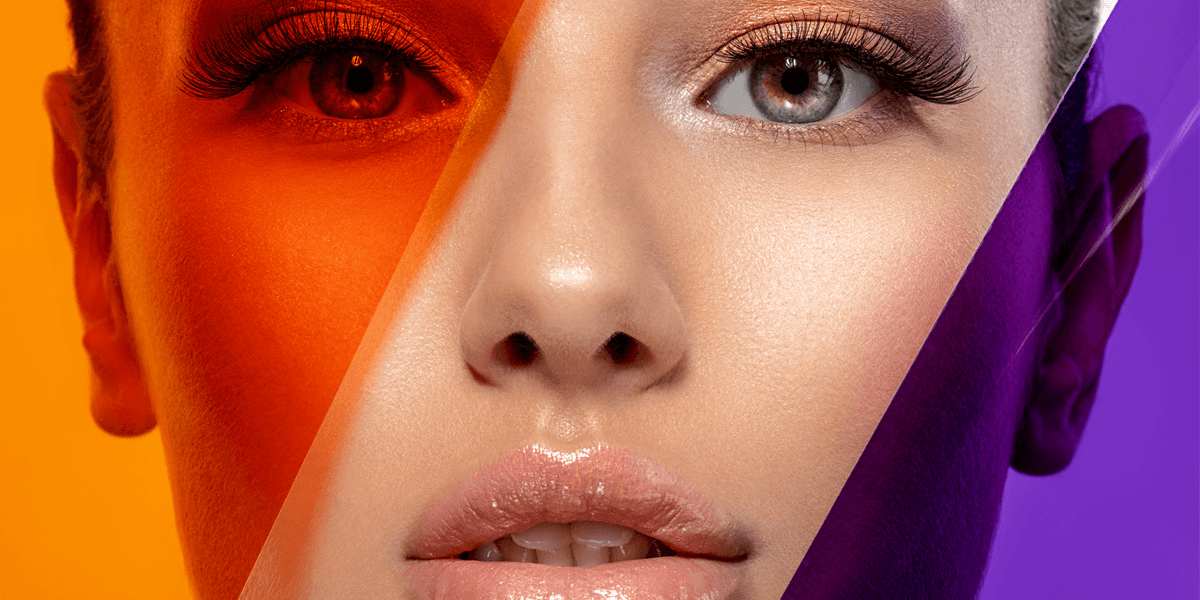
Beauty filters “airbrush” skin to give it a smooth, blemish-free, poreless appearance. They make faces more symmetrical. They often make cheekbones more pronounced, slim the jawline, and accentuate the eyes.
In this way, beauty filters normalize very specific standards of appearance and homogenize the kinds of faces we see online. Unfortunately, the standards that they use are often focused around white, thin, young, able-bodied features. This means that beauty filters are reinforcing a very narrow set of ideals, ideals that harm marginalized people groups.
AI has both sped up the use of beauty filters and also increasingly narrowed the kinds of appearance being idolized. Because AI aggregates data about pre-existing standards and ideals, it has simultaneously made beauty filters more racially biased and harder to detect. Even on videos with a significant amount of movement, AI is now able to consistently, seamlessly apply effects to change someone’s face — or even their whole body.
Why do people use beauty filters?
Beauty filters have become a standard tool to improve self-confidence and create a feeling of belonging. They are a short cut past insecurities to participate in what has become normal online culture. Filters can be a tool for self-expression, testing out what different aesthetics or alternate versions of yourself might look like.
It’s important to say that this kind of experimentation is normal, particularly for adolescents and young adults who are still deciding who they want to be and how they want to present themselves in the world. There is no shame if you are a person who has used beauty filters.
Applying filters is a very understandable behavior that can feel playful and temporarily alleviate negative emotions and insecurities. It may even be a way to explore out what a piercing or tattoo you’re considering might look like, or to test a new makeup look.
Some filters are also intentionally silly or extreme. When Snapchat first rolled out filters, much of the intention was this type of lighthearted fun, such as a widely-used filter that applied dog ears and a tongue. Filters are not inherently bad, and you are not a bad person for using them.
However, it is important to understand the risks, and how something that can start as goofy can become very serious.
What are the mental health effects of using beauty filters?
Scientific literature, mental health professionals, and social media users of all ages are largely in agreement: beauty filters negatively impacts mental health through enforcing unrealistic or unobtainable ideals, creating a culture of comparison, and leaving users feeling like they are never enough.
In one survey by StyleSeat, 72% of Gen Z users who were asked said that they saw beauty filters as being harmful for their mental health.
On a broad level, those harms can take the form of dissatisfaction and insecurity. But there are some more specific and severe mental health injuries that can happen because of the saturation of beauty filters — sometimes even extending to physical harm.
Dissatisfaction, comparison, and anxiety
Dissatisfaction with your own appearance as you compare yourself to the curated appearance of others is the most common impact of beauty filters. The more someone uses social media, the more that dissatisfaction grows.
For girls and female-presenting people, this can present as a fixation on attributes like thinness and clear skin, constantly comparing themselves to images that they might not even realize have been edited. For boys and male-presenting individuals, this might look like comparing body composition and how muscular they appear.
As with any kind of comparison, the process of constantly comparing your own face and body with others can ultimately be very isolating. Someone might start avoiding spending time face-to-face with friends, feeling that their appearance doesn’t measure up. They might even see filtered pictures of their friends and family members and begin avoiding that person because suddenly they have become a source of distress and anxiety.
Eating disorders and body dysmorphia
When body dissatisfaction escalates, it can lead to diagnosable body dysmorphia or eating disorders.
Body dysmorphia refers to a state of mind where someone cannot accurately perceive themselves, instead seeing a warped (usually negatively) view of their body. At its most extreme, it can become a distressing fixation on a false perception of specific body parts or physical attributes which is diagnosable as Body Dysmorphic Disorder.
Usually, the threshold for having body dysmorphic thoughts versus a diagnosable disorder comes from the level to which the thoughts interfere with daily life. This disorder is observable in as many as 1 in 50 adults, and many clinicians have seen a rise in the disorder connected to social media use.
Body dissatisfaction can also either lead to or exacerbate pre-existing eating disorders, such as Binge Eating Disorder, Bulimia Nervosa, and Anorexia Nervosa (listed in order of how commonly they occur). The internal documentation of social media companies like Meta themselves show that they know the platforms are triggering and accelerating eating disorders in teenage girls.
Many professionals identify social media as part of the meteoric rise in eating disorders, especially among children: hospital visits for eating disorder-related complaints nearly doubled between 2018 and 2022 in the United States. This is particularly concerning given that Anorexia Nervosa is the deadliest of all mental illnesses. Taken as a group, eating disorders as a whole fall second in mortality rate only to opiod addiction.
This means that beauty filters are not as harmless as they might seem: they can be an actual, documented contributor to illnesses that lead to lasting health complications or death.
The rise of “Snapchat dysmorphia”
Body dysmorphia has been recognized as an unhealthy set of cognitions for a long time. However, in recent years, many clinicians have started using “snapchat dysmorphia” (originally coined by plastic surgeon Dr. Tijon Esho) to refer to the very specific phenomenon they’re observing where dysmorphia is directly linked to filters.
Those with Snapchat dysmorphia get focused on a standard of “unattainable perfection.” This distortion is particularly hard to combat because someone suffering from this kind of thinking might not even be comparing themselves to someone else: they may be comparing their real face to the filtered version they have grown accustomed to seeing on social media. It becomes truly impossible to measure up.
Increased rate of plastic surgery
Disturbingly, many doctors are reporting an uptick in plastic surgeries — particularly in young people, who will often come in actually using filtered images of their own faces as reference photos.
This behavior might seem extreme, but it can seem like a solution for someone who is distressed by their sense of falling short in the digital social sphere. One study found a direct correlation between people who post more selfies and people who pursue plastic surgery. The the American Academy of Facial Plastic and Reconstructive Surgery has reported a 47% rise in cosmetic surgery since 2013. 55% of cosmetic surgeons heard a desire to look better in selfies as patients’ motivating goal.
“As a facial plastic surgeon, I have seen a significant increase in patients requesting procedures that mimic the filters commonly used on social media,” writes Dr. Monica Kieu. “Many individuals are using filters to preview the results of plastic surgery before they commit to a procedure. While this may seem like a helpful tool, it can also be problematic. Filters can create an unrealistic expectation of what plastic surgery can achieve.”
This means that many young people are getting invasive, permanent surgies that might not even alleviate their self-hatred in the way that they hope.
How are beauty filters linked to online exploitation?
Groomers and online predators are looking for one thing in their targets: vulnerability.
Few young people are as vulnerable as those who have been taught to hate themselves. For example, a teenager who believes that they are worthless might ache to be seen, to be known, to be called beautiful and valuable. If a charming stranger pops up in their DMs showering them with compliments, the appeal can be like a gravitational pull: impossible to resist.
Beauty filters also might give individuals a certain fabricated appearance that makes them easier to exploit, especially given that many of these filters automatically sexualize the subject. For example, a trafficker who is forcing a minor to create Child Sexual Abuse Material might have them use a filter when doing so to achieve the most marketable look. Beauty filters can be used either to make a minor seem deceptively older so their online sexual content seems consensual. Filters can also be used to keep a victim seeming younger, feeding the fantasies of predators.
This means that beauty filters are not only potentially threatening the well-being of a young person’s mental health. A byproduct of that reality could be that filters are genuinely intensifying kids’ risk of being exploited or even trafficked.
How can we fight the harmful effects of beauty filters?
The harms of beauty filters are known and multi-faceted. Although some people are able to truly use filters purely for fun, to experiment with different looks and styles, even most people who use filters admit that they feel harmful.
So what can we do to combat the harms of filters on social media?
1. Don’t use filters that modify your appearance.
An easy way to exit the vicious cycle of comparison created by beauty filters can be to stop using them, reduce how often you use them, or to let your friends know when you have applied one. Simply naming that an image has a filter on it for fun can start normalizing that there’s a difference between filtered and unfiltered reality.
Even just choosing to quietly stop applying beauty filters can provoke anxiety if you’re used to sharing your face with the world through that lens. Especially if you’re noticing changes in your eating and exercise habits to try and change your real-world body in response to the distress caused by filters, consider finding a counselor or support person who can help you work through those mental health challenges. You can locate help in your area at https://twloha.com/find-help/.
2. Have conversations about how it feels to use beauty filters.
Whether it’s with a family member, a professional, or with friends, consider just naming what it feels like to live in a world inundated with beauty filters and expectations around appearance. Let someone you trust know that you’re having doubts about how helpful it is to use these filters.
If starting that conversation feels too scary, an intermediate step can be journaling about it privately. How have you noticed your relationship with your appearance and your body change since using social media? What does it feel like when you see a friend post a photo that doesn’t look like their real face? How do you think social interactions would be different if no one was using beauty filters?
3. Identify and focus on sources of real-world validation.
If you want to disempower the voices of potential predators on social media, one of the best ways is by surrounding yourself face-to-face with people who know you, who love you for you, and who see your worth beyond your appearance.
See if you can identify even one person in your life who you trust. Ask them how they see you. Maybe ask what songs, movies, colors, or items they associate with you. This can expand your view of yourself to be so much bigger than simply how you look in a selfie. Normalize doing the same thing for your friends and loved ones, saying out loud what you appreciate about them.
If it’s feeling particularly hard to separate your sense of worth from concerns about measuring up to the standards set on social media, you might even consider taking a social media break — or more carefully curating your feed to reflect life in all its unfiltered variety and joy.
