

The mental health impacts of being chronically online
By Celeste Joy·August 1, 2026

The use of electronics is entrenched in everything we do, but our hearts and minds were not built for this digital deluge. The more you know, the more there is to consider. This article provides insights and ideas to help keep our families safe in this era of electronics.
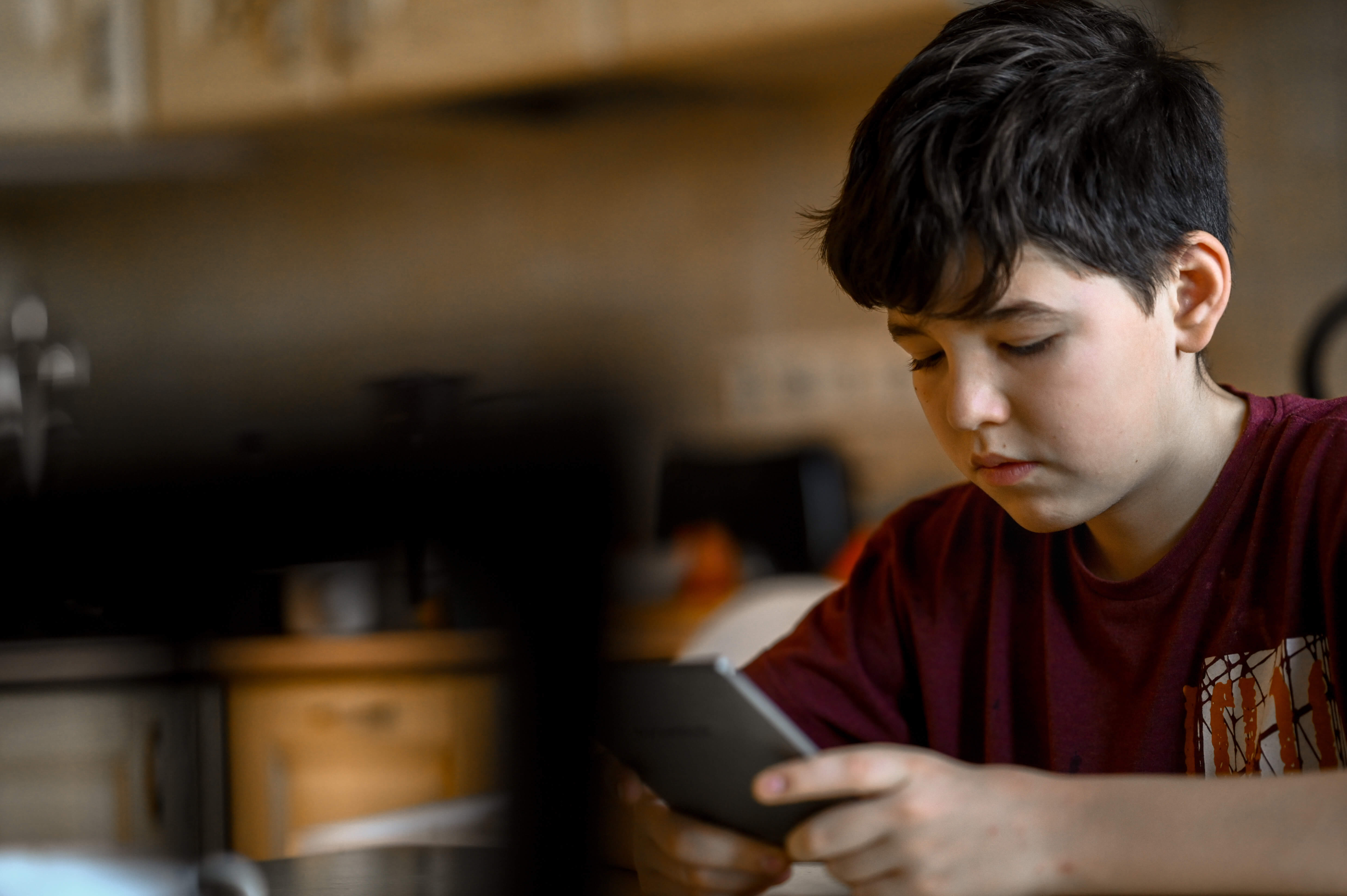
I always know when my stepson is coming upstairs for breakfast. I hear the cacophony before I hear his feet, the disjointed drone of reels behind the clank of his bowl. I peek into the kitchen to see him prepare his food, sliding onto a barstool while watching YouTube. His eyes never leave the screen, phone in one hand, shoveling bites with the other. Impressive, yet disturbing. If you are a parent of a teen, you’ve probably observed something similar.
As a mom and stepmom to a family of seven, the prevalence and risks of constant screen use are a daily reality. I have seen the mental health impact firsthand: the toll it takes on sleep, school, self-esteem, and even worldview. The research is clear on the risks of being chronically online, and it’s a layered issue.
In this article:
How much time are teenagers spending online?
Research from Pew tells us that U.S. teens are “online almost constantly.” Screens are integrated into every facet of modern life. There are big screens (televisions, gaming monitors), medium screens (computers, laptops, tablets), and small screens (phones and even watches), all tailored for different activities. When we consider the average teen spends 4.8 hours a day on social media alone (think YouTube, TikTok, Instagram, Snapchat), this doesn’t even scratch the screen protector of cumulative time online.
Social media is significant, but only part of the problem. Apps and even learning platforms have been gamified to drive engagement. We use our phones for navigation and for communication (though most kids don’t actually talk on a phone, preferring text). Our kids use computers for school and then hop onto a gaming console or watch shows in their free time.
A recent study from the University of South Australia confirms what we know: social media use in children is skyrocketing, and there is a corresponding “sharp decline” in “sports, reading, music and the arts.” Even some of these activities have become screen-oriented. Books are often read on devices. If you want to learn to play an instrument, pop over to YouTube for a tutorial — and you’re back on a screen.
What is doomscrolling?
We’ve all spent longer than we planned scrolling through social media. Admittedly, some content is fun. Who doesn’t love watching a beaver eat carrots?
But statistics show negative posts get more traffic. Our brain’s negativity bias means we have “a tendency to pay more attention to bad news than good.” The more time we spend with content, the more of it comes our way. Saves, comments, likes, and even lingering on a specific post feed the algorithm.
When we scroll social media, we tap into a dopamine loop that limits our ability to disengage. This is doomscrolling: spending “excessive time scrolling through online content (especially news) that makes one feel sad, anxious, angry, etc.”
Researching this article felt a bit like doomscrolling; I became anxious about the risks, but kept on reading. The data is everywhere.
Neuroscientist, Stanford professor, and podcaster Andrew Huberman is famous for discussing dopamine, noting that “any high amount of dopamine that comes to you without effort before it will eventually destroy you — or bring you close to destruction.”
This may sound extreme when applied to social media, but it tracks with research. Big screen, medium screen, little screen, time online adds up. Doomscrolling is likely the worst offender, but most everything has a social component intended to keep us connected.
How can being online impact your health?
In addition to dopamine, it is important we also understand the physical and mental impacts of being chronically online and why cumulative time matters. Most of us suffer from chronic screen use, scrolling and hunched in the shape of a cashew. The time sitting in a chair is directly intertwined with negative impacts on our physical and mental health. Children may be more vulnerable, but it is not good for anyone.
The negative physical effects of too much screen time include “nausea, headaches, muscle tension, neck and shoulder pain and low appetite” according to Harvard experts. We can develop text neck, and too much sitting in front of said screens is linked to increased risks of heart disease and cancer.
Sleep directly impacts our physical and mental health. When our kids are gaming, binging Netflix, or scrolling into the wee morning hours, they are not getting rest. According to the University of Michigan: “The CDC estimates suggest that 60 percent of middle schoolers and 70 percent of high schoolers don’t get adequate sleep on school nights.”
Lack of sleep can impact a child’s growing brain, mood, and ability to learn, and is associated with depression and anxiety. Getting adequate sleep is hard enough, but when combined with excessive screen use, the negative impacts snowball.
“The longer teens scroll, the greater their risk of anxiety, depression, and attention problems,” says the MedReport Foundation.
Scrolling social media can also trigger the comparison game, impacting how kids see themselves, contributing to poor self-esteem. It can contribute to a “distorted sense of the world” and “existential anxiety.”
That said, things in the world are hard: climate change, war, and homelessness could trigger anxiety for anyone. AI adds another layer of complexity because you can’t always trust the screen. There is a fiction blur on everything from physical appearance to news. This makes it even trickier to discern what is real.
As a mom, it is hard not to see how social media impacts behavior. Sometimes it seems every part of life has become a product to be curated and displayed online. If we are making backyard s'mores, we post photos. On vacation, we post snapshots to get “likes.” It’s the online cultural ethos, but it fuels comparison and the need for validation. Social media messes with our ability to enjoy life without a phone in our hand.
The things we hear in the news that seem outrageous are happening in our homes. My kids openly talk about “the pressure to fit a certain standard” created online and how “information overload makes people angry and aggressive.” They are also aware of online bullying and blackmail.
The National Center for Missing and Exploited Children received over 50,000 reports of sextortion in 2025. Still, research shows “most teens think the benefits of smartphones outweigh the harms for people their age.” This is the juxtaposition of digital connectedness: our children know the risk and scroll right toward it. Is this the new “it won’t happen to me” mentality? As a parent, it’s hard to comprehend, but most of our kids have never experienced another way.

Action steps to support physical and mental health
There are tons of tools and rules to help manage time online, but it all adds up for already exhausted parents. We won’t get it perfect, but we can make a difference; it is worth the time to figure out what works for your family.
The important thing is to stay aware and engaged. Our kids have grown up with screens. They may not be able to see alternatives, but it doesn’t mean there isn’t a better way.
01Talk to your child about the time they spend online.
Ask. what sites they visit and how much time they spend on each device. Set the expectation that conversations will be ongoing — and will change as they get older.
02Consider the age of each child and what content is appropriate and when.
This will vary by age and platform. Social media is more detrimental to younger brains. If your children don’t have a phone, wait as long as possible to get them one. Middle schoolers are still developing a sense of self and may be particularly vulnerable. With too much time online, young teens may not “develop the [social] tools they need.”
03Move things out into the open where kids are not isolated when they are online.
Bring gaming consoles out of rooms and create central study spaces. This allows you natural purview to time spent and sites visited. Keep phones away from the dinner table and out of their rooms while they sleep. As annoying as the noise can be, try to limit headphone use, at least in your home. The more you can hear, the better visibility you have.
04Time limits are a common tension point for parents and teens, but while unpopular, they make a difference.
Data from the American Psychological Association shows that “strong parental relationships and monitoring significantly cut the risk of mental health problems among teen social media users.” Further, teens report less time on social media apps when their parents limit screen time.
05Implement digital boundaries.
Good habits you can try as a family include switching phones to greyscale and turning off app notifications (though silencing your apps might make you even more curious to “check-in”).
Digital boundaries require us all to train our brains to focus on things other than the infinite scroll; consider goals big enough to pull attention away from immediate, distracting pings and alerts.
A product that can support digital boundaries is Brick. This device blocks certain apps at set times, giving you more control. It is another product, but an option to consider.
06Model behavior we want to see.
Most adults spend too much time online and have a better chance of supporting healthy digital habits if we are not on a screen ourselves. “Nearly half of teens (46%) say their parent is at least sometimes distracted by their phone when they’re trying to talk to them.”
When we are preoccupied by an Instagram reel, we may be missing a bid for attention coming from our child — even a precious opportunity to chat with them about this very topic.
Most of all, keep an eye on your kids. If they seem anxious or depressed, don’t ignore it. Some people do need professional assistance to overcome online habits.

How can we be less chronically online?
The best thing we can do to limit online activity is to build family time around new hobbies. Skip movie night and opt for putt-putt golf or a board game. Time together can strengthen relationships and create lasting memories. Whether it is a meal sans phones, a walk together or a few hours volunteering, planning activities that do not involve screens offers a win for individual and collective wellness.
You may get initial resistance; that’s okay. It is a healthy step. Being uncomfortable can be a catalyst for development, creativity and problem solving.
Investigate safe third space places where your children can play and hang out without a screen. Youth groups, skate parks, and after-school clubs are an example. Create a space in your home for non-screen activities. Get a ping pong table or dart board.
We often have neighborhood kids at our house playing table tennis. I spend more money on snacks, but having kids playing without screens is a worthwhile tradeoff.
Finally, acknowledge progress when you see it. One of my daughters has fantastic phone boundaries. I admire her discipline and am occasionally frustrated with it, as I am used to a quick response. We all need to relearn what healthy looks like for ourselves and our families.
Keep going
Ready to take the next step in your family’s online safety and wellness? The Influenced Parent Academy is designed to help you do exactly that.
Influenced™ is the digital safety education program of The Exodus Road®.
